

- This event has passed.
Pinto Correia, Elgar, & Fauré
ANDREIA PINTO CORREIA (b. 1971)
Pleistocene Landscapes
Jeffrey Zeigler, cello
EDWARD ELGAR (1857–1934)
Sonata for Violin and Piano in E Minor, Op. 82
Ani Schnarch, violin • Tao Lin, piano
GABRIEL FAURÉ (1845–1924)
Piano Quartet No. 2 in G Minor, Op. 45
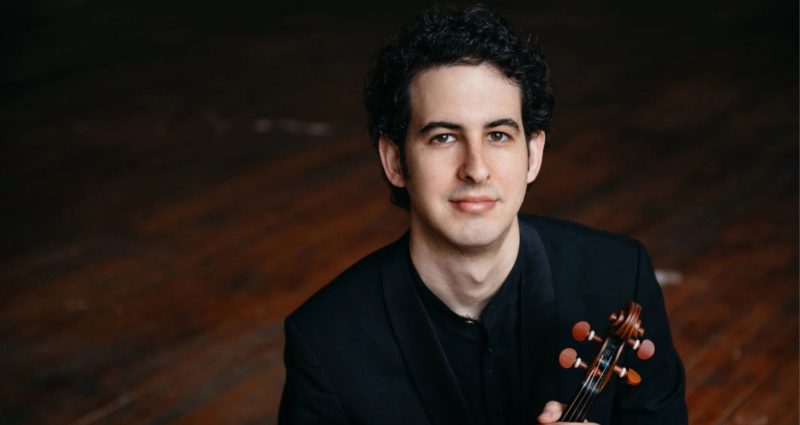
Itamar Zorman, violin • Maiya Papach, viola • Ahrim Kim, cello • Soyeon Kate Lee, piano
—
Program Notes
ANDREIA PINTO CORREIA
Pleistocene Landscapes (2018, Cello Version 2026)
Originally written for solo alto flute or solo bass flute, Pleistocene Landscapes is a reflection on deep time and the metamorphosing of landscapes through history. The work unfolds sonically and atmospherically, evoking the erosion and geomorphology of Lake Mungo in Australia, an active and vibrant site during the Pleistocene Era. As the piece develops, layers of musical narrative rise to the surface, only to be subsequently submersed by sounds evoking wind and erosion. Pleistocene Landscapes is an homage to an extraordinary ancient historic site and its culture.
Pleistocene Landscapes was written with the generous support of the Australian National University (ANU) and was premiered in 2018 at the Symposium Understanding the Deep Past Across Language and Culture — ARC Laureate Program for the Deep Human Past and the Indigenous Linguistics Alliance. Thank you to the Paakantji, Ngyampaa and Mutthi Mutthi peoples for their generosity and trust during my visit to Lake Mungo.
The cello version is dedicated in friendship and with admiration to Jeff Zeigler.
Projection Photo Credit: Prof. Ann McGrath
Program Note by Andreia Pinto Correia
EDWARD ELGAR
Sonata for Violin and Piano in E Minor, Op. 82 (1918)
In late August of 1918, the violinist Billy Reed visited Sir Edward Elgar at Brinkwells, a Sussex country house that the composer’s wife Alice secured so he could recover from illness and focus on work. When he arrived, Reed recalled Elgar “fitting in exactly with his surroundings” in this silvan retreat: “At the top of the hill, looming on the skyline, was what at first sight I took to be a statue; but as we drew nearer, I saw it was a tall woodman leaning a little forward upon an axe with a very long handle. The picture was perfect and the pose magnificent. It was Sir Edward himself.”
Reed was there to read through drafts of a new Violin Sonata by Elgar. He had started the piece just over a week before in a burst of creativity, after going more than a year without producing new work. The sonata’s first movement is a dramatic, efficient Allegro. It features a touching secondary theme in which the notes of the violin’s plaintive melody are elegantly folded into a longing-filled stream of arpeggios. In the Romance, shimmering, muted gestures full of bluster and capricious energy (“wood magic,” according to many close to the composer) are rapidly passed back and forth between the violin and piano.
Elgar had only written one phrase of the Allegro non troppo finale when Reed came to stay. “We used to play up to the blank page,” the violinist recalled. “Then [Elgar] would say ‘And then what?’ — and we would go out to explore the wood.” The last movement sustains a mood of pastoral wonder and satisfaction, though before the coda there is a disarming quotation from the passionate middle section of the Romance. Elgar would use a similar, cyclic strategy at the end of his 1919 Cello Concerto in E Minor and, as in that piece, the repeated theme in the Violin Sonata gives this otherwise reassuring music a tragic air.
Program Note by Nicky Swett
GABRIEL FAURÉ
Piano Quartet No. 2 in G Minor, Op. 45 (1886)
Fauré’s Op. 45 Piano Quartet is the second of his two works in the genre, begun shortly after revisions to the Finale of the first one. In the absence of any clear motivation or commission for Fauré to compose another piano quartet, musicologists have concluded that Fauré must have simply wished to continue to explore the genre in greater depth. Given the successful reception of his first quartet, this would make sense.
Although Fauré appears to have devoted all of his compositional energies to the quartet during 1885–86, there is little trace of the work in his correspondence from that period. However, twenty years later the work gave rise to a Proustian experience, and one of Fauré’s most evocative musical and philosophical ruminations. He expressed it thus in a letter to his wife:
“It is only in the slow movement of my Second Quartet where I can remember having translated, without really meaning to, the distant memory of bells ringing, which at Montgauzy in the evenings, would reach us from a village called Cadirac when the wind blew from the west. Their sound gives rise to a vague reverie, which, like all vague reveries, is not translatable by literary means. Yet isn’t it often that something external lulls us into thoughts of a sort so imprecise that they are not really thoughts at all, though the mind certainly finds them pleasurable. Perhaps it’s a desire for something beyond what actually exists; and that is indeed the domain of music.”
Fauré is describing the opening of his Adagio, the quartet’s third movement. The piano begins in the bass register, suggesting muted bells of pendular regularity, striking perfect fifths; syncopated, these faraway chimes cut across the time signature of 9/8, before dissolving up the keyboard in an arpeggio, out of time. While Fauré consistently mistrusted music’s ability to express “external,” or non-musical, thoughts or imagery, he seems to hint that this movement, in its association with a specific sonic memory, was an exception. In the words of musicologist Carlo Caballero, Fauré here found himself “up against the threshold of musical ineffability.”
Program Note by Peter Asimov